ServicesRoof Replacement
Roof Replacement in Villa Hills, From Tear-Off to Final Sweep
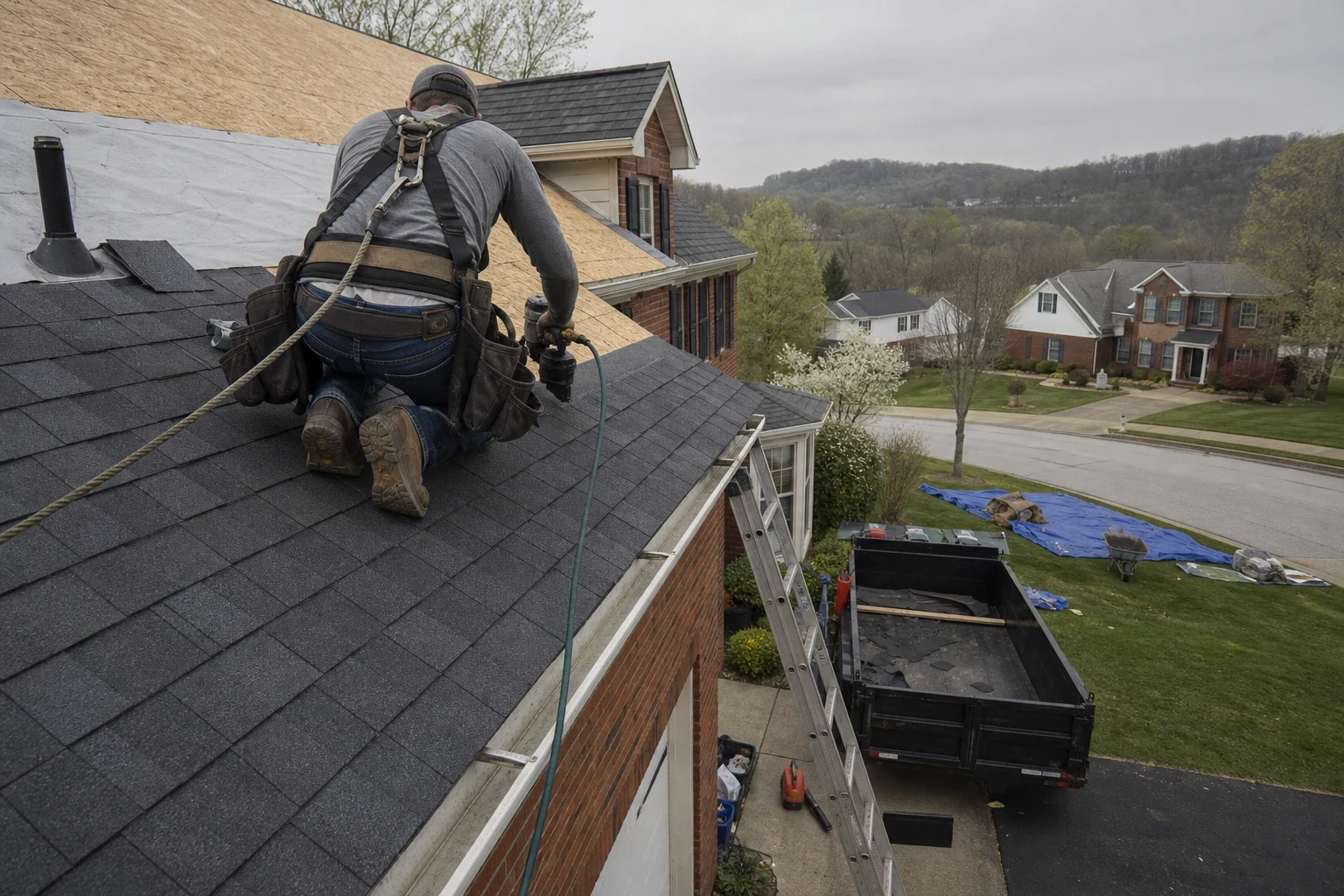
When patches stop holding, a new roof is the fix that lasts. We tear off down to the decking, show you photos of what we find and build the new roof one layer at a time. If a storm caused the damage, we explain how the claim works.
Repair or Replace: Where the Line Falls
A roof can usually take a few fixes over its life. Then comes a point where the shingles are tired on every slope, not in one corner, and each patch holds for a shorter stretch. Past that point, a full replacement is cheaper than paying for leak after leak.
We will tell you which side of that line your roof is on. If a repair will hold for years, we say so and point you to our roof repair service. If the roof is done, we show you why with photos taken on your roof, not a sales sheet.
Some replacements start with a storm. In that case we document the damage before anything else happens, so you have a clear record to share with your insurance company. We explain the steps. Your adjuster makes the call on coverage.
What Your New Roof Includes
- 01
Full tear-off to the decking
We strip every old layer so we can see the wood underneath. Going over an old roof hides problems and adds weight.
- 02
Decking check and replacement
Soft, rotted or delaminated boards get marked, photographed and replaced. You see the photos before we cover them.
- 03
Ice and water shield plus underlayment
We lay ice and water shield along the eaves and in the valleys, where winter ice backs water up under shingles. Synthetic underlayment covers the rest of the deck.
- 04
New flashing at every wall, chimney and vent
Old flashing gets replaced, not reused. Most leaks on newer roofs start at flashing, so this is where we slow down.
- 05
Ridge and intake ventilation
We check that air can move from the soffits to the ridge. Good airflow keeps the attic drier and helps shingles last.
- 06
Cleanup you can walk on barefoot
Tarps cover your shrubs and flower beds during tear-off. Old shingles go straight into the dumpster instead of onto the grass. Before we pack up, we go over the yard and driveway with a rolling magnet so loose roofing nails don't end up in a tire or a foot.
Questions about Roof Replacement?
Call(859) 340-8810Signs Your Roof Needs Replacing
Curling or cracked shingles across the roof
One bad spot is a repair. Curling on every slope means the shingles have dried out and lost their seal.
Bare spots and granules in the gutters
Shingles shed their granules as they age. Piles in the gutters or downspouts mean the asphalt underneath is now exposed to sun and rain.
Leaks in more than one place
When water shows up in different rooms, or the same leak keeps coming back after repairs, the roof is usually failing as a whole.
A sagging roofline
A dip between rafters often means wet, weakened decking. That needs attention before the next heavy snow.
Widespread hail or wind damage
Bruised, cracked or missing shingles across several slopes can make replacement the honest answer. We photograph it so you can decide whether to file a claim.
How a Replacement Day Goes
- 1
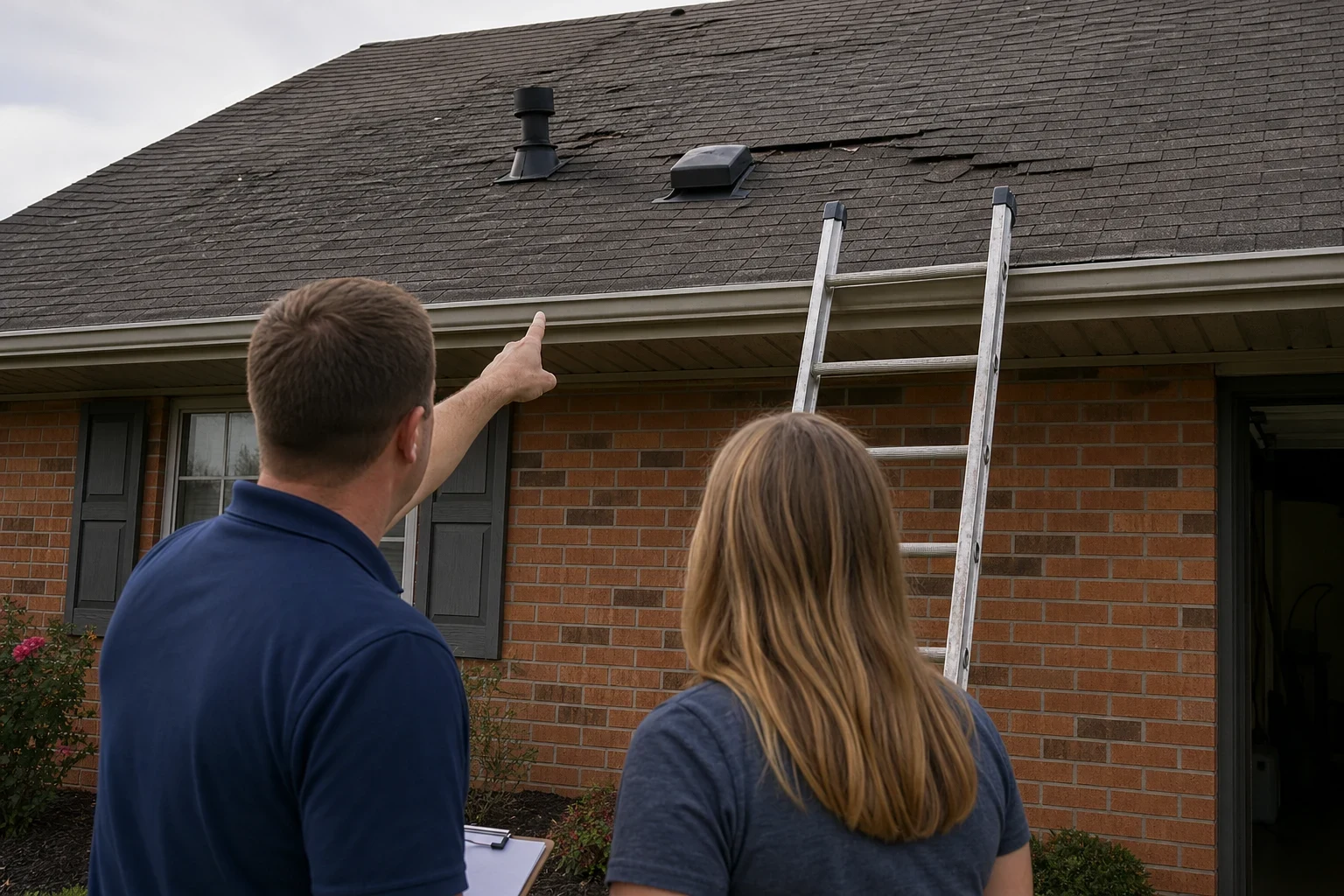
A free look, top to bottom
We get up on the roof, look in the attic when there is access and photograph what we find. Then you hear it straight: repair or replace, and the reason.
- 2
Written estimate and claim help
You get a line-item estimate covering materials, decking allowance and permit. If insurance is involved, we walk you through what the adjuster will look for and can meet them on the roof.
- 3
Permit and scheduling
We pull the permit where it is required and set a start date around the weather. You know the day before we arrive.
- 4
Tear-off and build
Most homes take one to two days. We open only as much roof as we can dry-in that day, so your home is never left exposed overnight.
- 5
Walk-through and cleanup
We clear the yard, haul the debris and walk the finished roof with you. You also get the photos from the job for your records.
What Moves the Price of a New Roof
Every roof is priced on its own measurements and condition. We give you a written estimate that shows each part of the job, so nothing on the final bill comes as a surprise. If a claim is approved, we explain how the insurance payment lines up with that estimate.
- Size and pitch
- Square footage sets how many bundles of shingles and how many labor hours the job takes. Pitch matters too. On a steep slope the crew works slower and has to rig harnesses and roof jacks before anyone starts nailing.
- Old layers coming off
- One layer of shingles strips fast. If two or three are stacked up there, tear-off takes longer and the dumpster costs more.
- Decking condition
- We cannot see every board until tear-off. Your estimate shows the cost per sheet of replacement decking, and we photograph each piece we change.
- Shingle and material choice
- Architectural shingles, upgraded underlayment and extra ventilation each change the total. We explain what each one does so you can choose.
- Chimneys, skylights and valleys
- Each one needs custom flashing and careful work. A plain gable roof costs less than one with several valleys and penetrations.
Roof Replacement Questions
Will my insurance pay for a new roof?
That comes down to your policy and to what did the damage. Most policies are written for sudden events like hail or wind, and they generally leave out a roof that simply wore out with time. We photograph what we find and explain the claim steps, but the adjuster decides coverage. We will not promise you an approval we cannot control.
Can you put new shingles over my old roof?
We do not recommend it. Laying over hides soft decking and old flashing problems, adds weight to the framing and can shorten the life of the new shingles. A full tear-off lets us fix what is underneath.
How long will the job take?
Most homes are finished in one to two days of work. Steep roofs, larger homes or a lot of decking repair can add time. Rain delays happen, and we will call you if the schedule moves.
Will I have to stay home on install day?
That is up to you. We do like a few minutes with you before work begins and again at the final walk-through. Tear-off is loud, and you may feel the house shake a little. Park your cars on the street and take mirrors or framed pictures off the upstairs walls.
What if it rains while my roof is open?
We only tear off what we can cover the same day. Underlayment goes down right behind the tear-off, and we tarp any open area if weather moves in early.
Should I replace my gutters at the same time?
If your gutters are sagging, leaking or pulling away from the fascia, doing them with the roof saves a second setup. We can look at them during the inspection. Our gutters page covers what that work includes.
Find Out Where Your Roof Stands
We will climb up, take photos and tell you plainly whether you need a new roof or a repair. If storm damage is part of it, we explain the claim steps before you call your insurer.