ServicesRoof Inspections
Roof Inspections in Villa Hills With Photos of Everything We Find
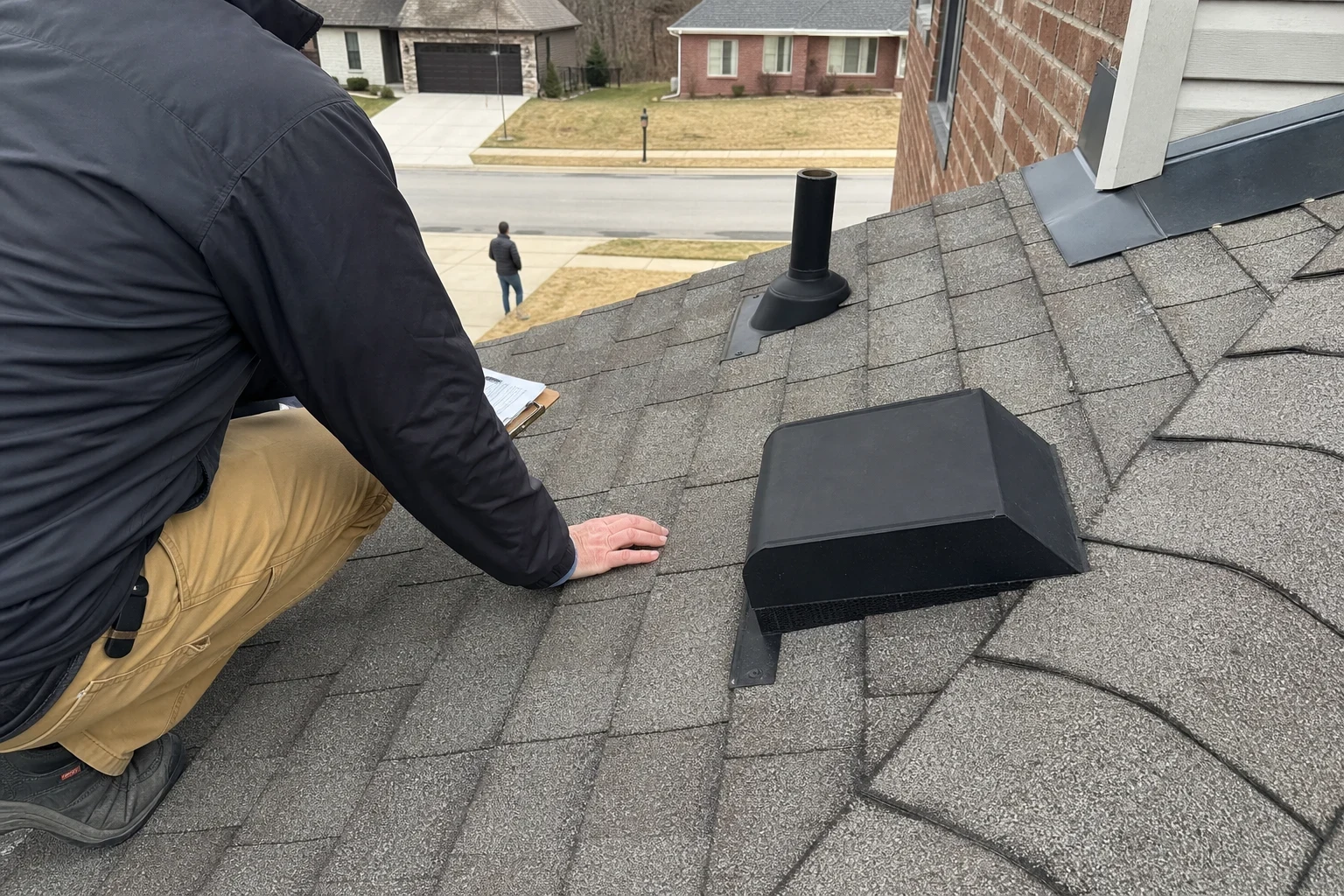
We get up on your roof, look at every part of it and come down with photos. You hear what is sound, what is wearing and what needs work soon. If a storm did damage, we show you how to document it before you decide anything.
When a roof inspection makes sense
We climb up and look over the whole roof the way someone who fixes roofs for a living would. If you're OK with it, we check the attic too. Then you get a plain account of what we saw, without the jargon.
Good times to call: after hail or a hard wind, before you buy or sell, once the roof passes 15 years, or when a ceiling stain shows up and nobody knows where it came from. Late fall is smart too, before freeze and thaw get to work on loose shingles and open seams.
We don't use an inspection to sell a roof. A lot of the roofs we see need nothing, or one small fix. When that's the case, we say so.
What we check on every inspection
Shingle condition
We note shingles that are gone, split or curling, patches where the gritty top layer has worn off, and soft dents left by hail. We also give you our read on how many years the surface has left.
Flashing and roof openings
Most leaks start at chimneys, walls, skylights and pipe boots. We check the metal, the sealant and the rubber collars around vent pipes, which crack after years of sun and cold.
Attic and ventilation
From inside the attic we look for daylight, damp insulation, dark stains on the decking and rusty nail tips. Poor airflow shortens a roof's life and feeds ice dams in winter.
Gutters and roof edges
Clogged or sagging gutters push water back under the edge. We check the drip edge, fascia and downspouts while we're up there.
A photo report you keep
Every issue we find gets its own picture and a line or two on what it is and how soon it should be dealt with. Keep the whole set. It comes in handy for planning, a sale or an insurance claim.
Signs it's time for a roof inspection
A storm just came through
Hail and wind damage is easy to miss from the ground. Bruised shingles and lifted tabs may not leak for months. A look soon after the storm gives you photos dated close to the event.
Grit in the gutters
Any new roof sheds some loose granules. If you're scooping heaps of them out of the gutters or seeing them fan out below the downspouts, the shingles are wearing down.
Ceiling stains or a musty attic
A brown ring overhead or a stale, wet odor in the upper rooms tells you the roof has let water past it. The stain often sits several feet from the spot where the leak actually starts.
Ice dams last winter
Thick ice along the eaves points to heat escaping into the attic. We find out why, and whether water got under the shingles.
An older roof or a pending sale
Many general home inspectors stay on the ground. We get on the roof and give you a clearer read on its condition and how many years it has left.
How an inspection visit goes
- 1
The phone call
You tell us what you've noticed and any storm dates you remember. We set a time that works for you.
- 2
On the roof
We set the ladder, walk the roof if the pitch and weather allow, and photograph what we see. On steep or wet roofs we work from the ladder and the edges instead of taking chances.
- 3
The attic check
With your OK we go up into the attic with a light. This short step often tells us more than the shingles do.
- 4
Going over the photos
We sit down with you and sort the findings into urgent, can wait and fine. When storm damage turns up, we lay out the usual order of a claim and which photos and notes tend to matter. Coverage is the adjuster's call, not ours.
- 5
Next steps are yours
If roof repair or replacement makes sense, we give you a free estimate. There's no pressure to book anything.
What affects the cost of work after an inspection
The inspection itself is free. What we find drives the cost of any work that follows, and we explain each item before you agree to anything. These are the things that move that number most.
- What's under the shingles
- Soft decking, rotted fascia or wet insulation add work. We show you the photos so you can see why.
- Roof size and pitch
- A big or steep roof takes more material, more safety gear and more time.
- Repair or replacement
- A spot repair costs far less than a new roof when the rest of the roof is sound. We tell you which one fits and why.
- Insurance coverage
- If a covered storm caused the damage, your policy may pay for part of the work after your deductible. Your insurer makes that call. We give you the documentation to support it.
Roof inspection questions
Something not covered here? (859) 340-8810
Is the inspection really free?
Yes. Walking the roof, taking pictures and talking you through the results costs you nothing. Should you decide on repairs, the estimate is free as well. What happens next is up to you.
Are you going to tell me I need a new roof?
Only if you do. Plenty of roofs we inspect need a small repair or nothing at all. We show you the photos so you can judge the condition for yourself.
Can you help with an insurance claim?
We can document the damage with dated photos and notes, explain how the claim process usually works, and meet your adjuster on the roof if you'd like. We don't promise what insurance will cover. That decision belongs to your insurance company.
When should I have my roof checked?
Once a roof is more than 10 years old, a look every year or two keeps small problems small. Add a visit after any hail or strong wind. Late fall works well, before snow and ice arrive.
Do I need to be home?
Not for the outside part. For the attic check and going over the photos, it's best if someone is there. We'll pick a time that suits you.
Do you look at gutters and siding too?
We check gutters and roof edges on every visit. If the same storm marked up your siding, we'll photograph that as well, since an adjuster will want the whole picture.
Get a clear read on your roof
Pick up the phone and we'll set a time for a free inspection. You'll get photos, a plain account of the roof's condition and an honest word on next steps, including how a claim works if storm damage turns up.