ServicesRoof Repair
Roof Repair in Villa Hills That Fixes the Cause of the Leak
The wet spot on your ceiling is where water ends up, not always where it gets in. We follow it back to the real entry point, take photos and fix that spot. If a repair won't hold up, you'll hear that before you pay for one.
When a Repair Is the Right Call
Most roofs don't fail all at once. One section of flashing lifts, a pipe boot cracks or a few shingles blow off, and water finds the gap. If the rest of the roof is sound, fixing that one area is usually the smart move. It costs less and buys you years.
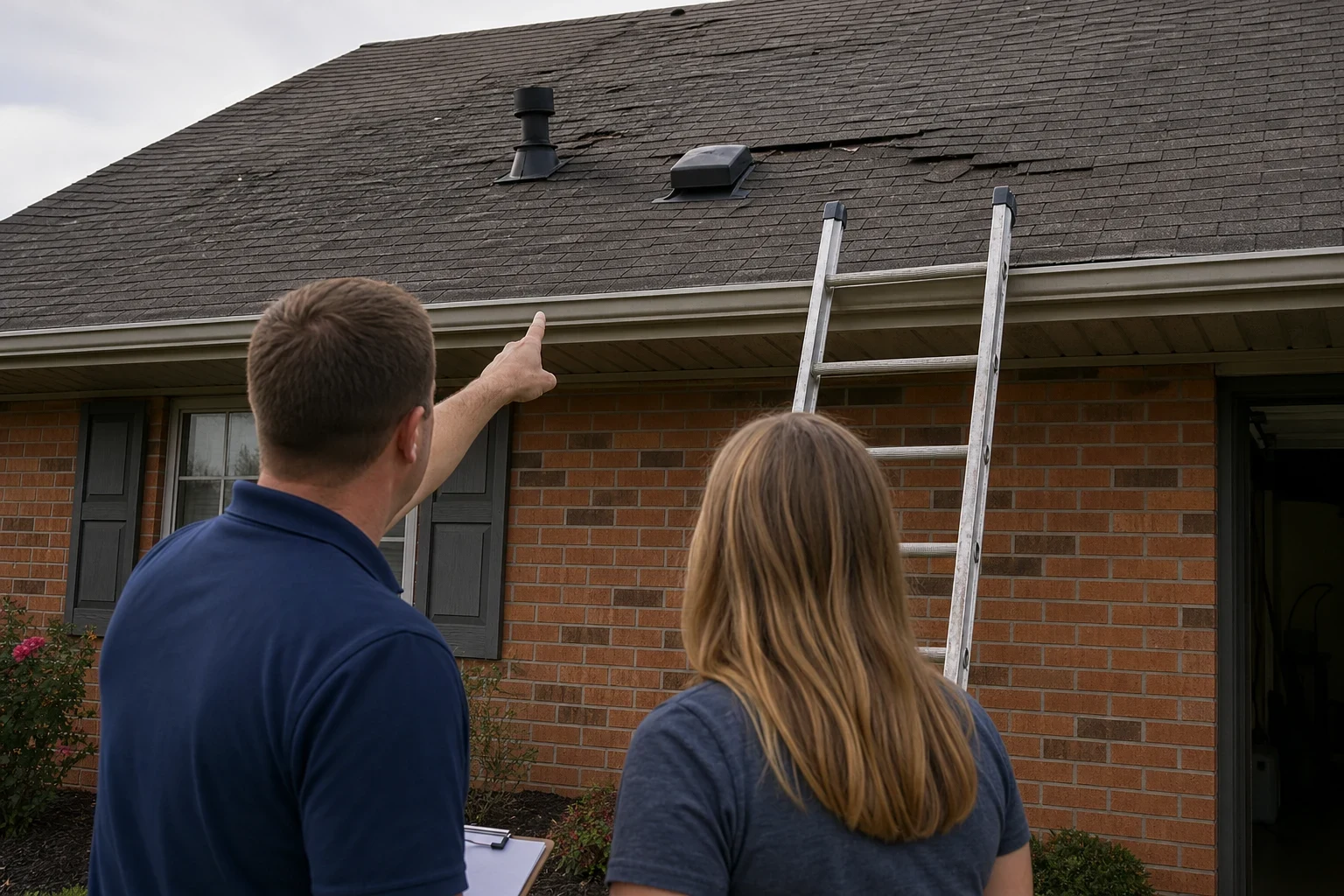
We start with a free roof inspection. We look at the problem area, the shingles around it, the decking underneath when we can reach it, and the attic below. Then we give you a straight answer. Sometimes that answer is a small fix. Sometimes the roof is near the end and a patch would just delay roof replacement, and we'll say so.
If the damage came from wind or hail, we take photos and notes you can use if you decide to file a claim. We explain how that process usually works. The adjuster makes the call on coverage, not us.
What Our Roof Repair Covers
- Leak tracing
- Water runs along decking and rafters before it drips. We follow the trail from the stain back to the entry point, checking valleys, penetrations and walls that meet the roof.
- Shingle replacement
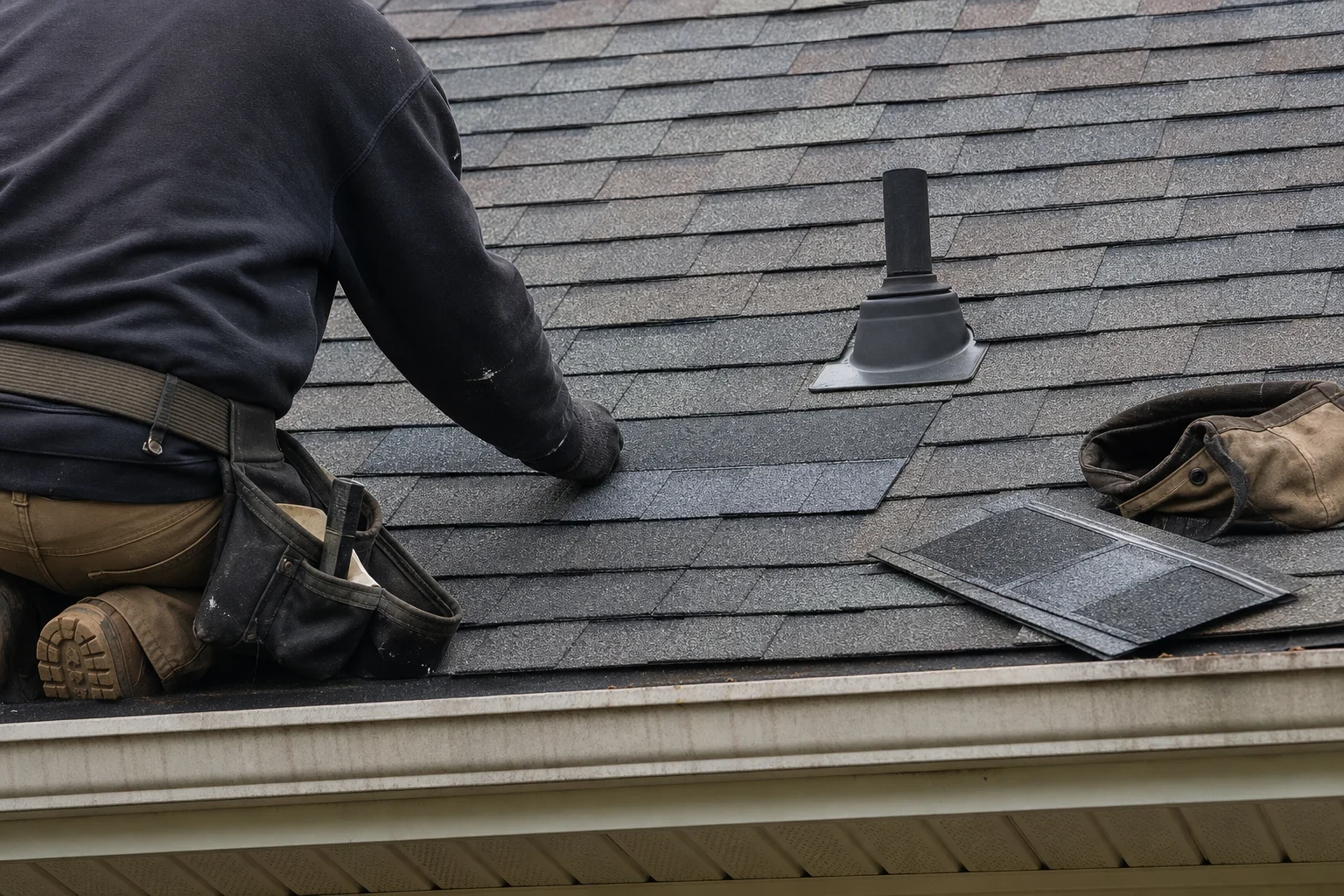
- We replace missing, cracked or curled shingles and match them as closely as we can to what's on your home. Each one is nailed in the right spot, not just glued down.
- Flashing repair
- Chimney, wall and skylight flashing is where a lot of leaks start. We reseal or replace bent, rusted or pulled-away flashing so water sheds the way it should.
- Plumbing vent collars
- The rubber collar around a plumbing pipe gets brittle after years of sun and starts to crack. We put on a new boot and look over the other roof vents for cracks and loose fasteners.
- Soft decking
- When a leak has gone on for months, the plywood sheathing can turn spongy. We take out the damaged piece back to solid wood, fasten new sheathing in its place and shingle over it.
- Photos of what we found
- You get pictures of the problem before we fix it and after. You can see what you paid for without climbing a ladder.
Signs Your Roof Needs a Repair
Marks on a ceiling or wall
Yellow-brown blotches or paint that starts to blister tell you water has already made it inside. Every rain after that soaks a little more wood and drywall.
Shingles in the yard
After a windy night, pieces of shingle in the grass or on the driveway mean there's an open spot up top.
Ice buildup at the edges
Thick ice along the eaves in winter can push water up under the shingles. Freeze and thaw cycles in Northern Kentucky make this common, and it often shows up as a leak near an outside wall.
Granules in the gutters
Shingles shed a little grit as they age. Heavy piles in the gutters or at the downspouts mean the shingles are wearing thin in spots.
A stale smell up in the attic
Insulation that feels wet, stained boards overhead or air that smells stale usually means a slow leak. It can go on for a long time before it ever reaches your ceiling.
What Moves the Price of a Repair
We can't give a fair number until we've been up on the roof, since the cause sets the scope. Swapping a cracked pipe boot is a short job. A leak that has soaked the plywood for a year takes a lot more. You see the price before any work begins.
Condition of the plywood
Firm plywood under the shingles keeps the job small. Wood that has gone spongy or rotted has to come out and be replaced, which adds material and time.
Pitch and access
A steep roof or a tall second story takes more safety gear and more time to work on.
Matching materials
Common shingles are easy to find. Older or discontinued styles can take more effort to match.
Size of the damaged area
A few shingles is one thing. A whole slope torn up by wind is closer to a section rebuild.
How a Repair Day Goes
- 1
Free inspection
We come out, get on the roof and into the attic, and take photos. You hear what we found and what we think it needs.
- 2
Clear estimate
We lay out the repair line by line so you know what's being fixed and why. No work starts until you say yes.
- 3
The repair
Most repairs take a few hours. We put tarps down to protect your landscaping, fix the problem area and check the spots around it while we're up there.
- 4
Cleanup and walk-through
We pick up old shingles, nails and scraps and run a magnet over the ground. Then we show you the after photos and answer any questions.
Roof Repair Questions
Can you just patch the spot that's leaking?
Often, yes. If the rest of the roof is in good shape, a targeted repair is the right fix. We check the surrounding area first so we're not sealing one hole while another is about to open.
Is my roof worth fixing, or should I start saving for a new one?
We weigh three things: how old the shingles are, how many trouble spots we find and how solid the decking is. If one fix will hold, that's what we recommend. If you'd be calling us back every season for another patch, we'll tell you roof replacement is the better spend.
Will my insurance pay for the repair?
That comes down to your policy and what caused the damage. Wind and hail are often covered, while normal wear and age usually aren't. We take clear pictures and walk you through what we saw on the roof. Whether it's covered is up to the adjuster your insurer sends.
Do I need to be home during the repair?
Not always. We need to get into the attic during the inspection, so someone should be home for that. For the repair itself, we just need access to the yard and a way to reach you by phone.
Can you match my existing shingles?
We get as close as we can by brand, style and color. Shingles that have been in the sun for years fade a bit, so a new piece may look slightly different at first and blend in over time.
Get That Leak Looked At
Small roof problems grow with every rain. Give us a call and we'll set up a free roof inspection, show you the photos and tell you plainly what it needs.